
Playbooks
Farmer-owned evidence and cascading requests: how multi-hop coffee and cocoa chains close EUDR gaps
Multi-hop coffee and cocoa chains close EUDR gaps when evidence stays with the producer network, requests cascade for missing pieces only, and the Field App stays free.
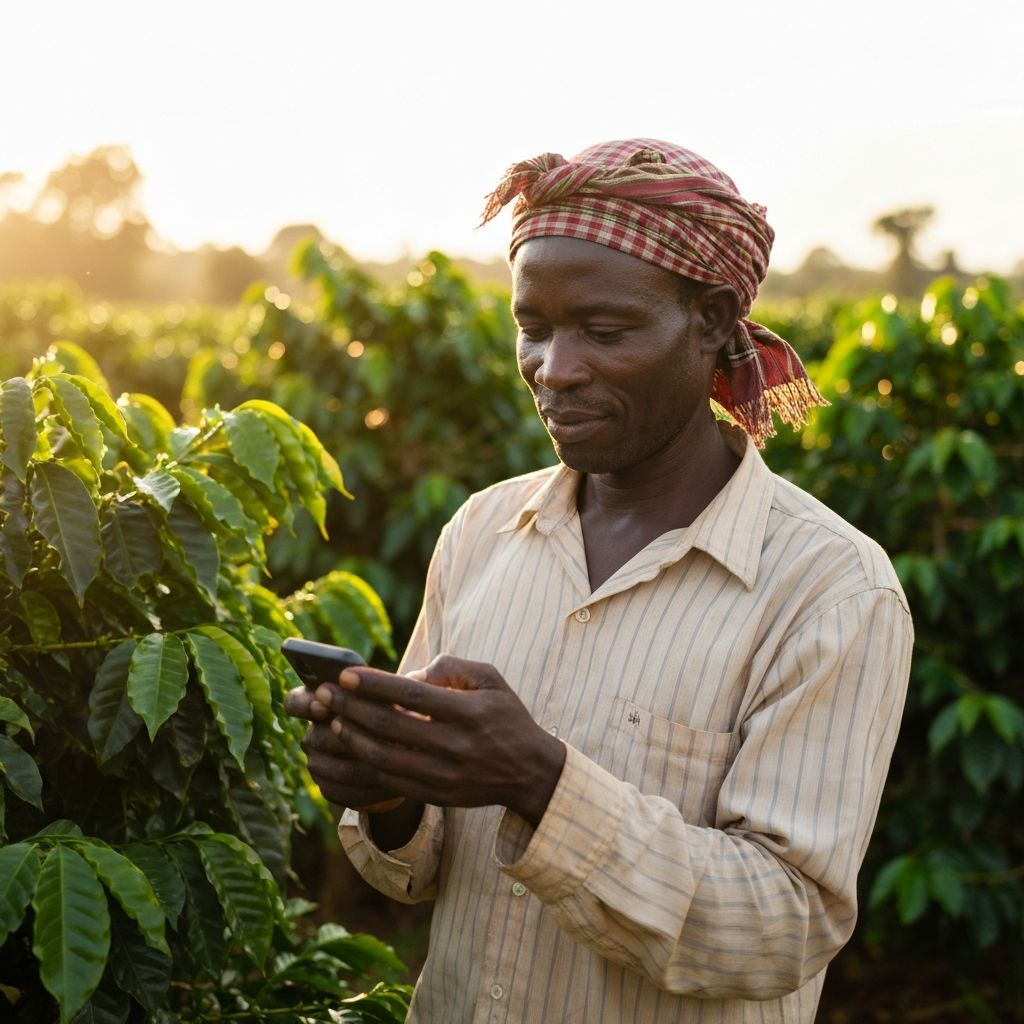
Coffee and cocoa rarely move in one hop. A plot feeds a collection point, a mill, an exporter, an importer, then a brand. EUDR gaps open when origin evidence is trapped in one buyer's portal, when every new ask means a full remap, or when farmers are asked to pay for the app that documents their own farm.
Multi-hop chains close those gaps when evidence stays with the producer network, requests cascade for missing pieces only, and the Field App stays free. That is the design Tracebud puts under coops and small EU buyers who need self-serve EUDR readiness this season, not another consulting rebuild for every regulation.
Why WhatsApp and Excel fail at destination
WhatsApp photos and Excel lists travel fast between people who already trust each other. They fail at destination. An importer in Europe cannot turn a chat thread into plot-level geolocation with consent, six-decimal clarity, and a chain story that still makes sense after the silo. A spreadsheet with names and approx GPS does not survive a due diligence review.
The failure is not that field agents are lazy. The failure is that informal tools were never built to carry farmer-owned evidence across hops. By the time the bean reaches the first placer on the EU market, the story has thinned. Someone invents a clean package under time pressure. That package does not hold.
Farmer-owned vs buyer-locked hubs
Buyer-locked hubs store maps where only one customer can see them. When the coop sells to a second buyer, the farm is remapped or the data is renegotiated. Origin evidence should not be trapped in one portal.
Farmer-owned evidence means consent and visibility travel with the record. The producer network decides who may see which plot. A new buyer gets access by request and consent, not by owning the database. That is how multi-hop coffee and cocoa chains reuse the same first mile instead of rebuilding it for every logo and every contract.
Tracebud is programme infrastructure, not a certifier. It does not replace scheme portals. It keeps the living field record from becoming one buyer's private asset.
Cascading in practice
Cascading requests are the opposite of seasonal remapping. Someone downstream needs a clearer polygon, a consent refresh, or a missing farmer detail. The request travels back through the network to the people who can fix that piece. The rest of the record stays.
Cascade means gaps, not a full remap. Field agents do not walk every farm again because one importer changed a template. Coops do not lose a harvest cycle to data clean-up that should have been a single ask.
When a producer has no smartphone, a cooperative or exporter Field Agent captures on their behalf. The plot, photos, and consent stay under the farmer's name. Agencies and delivery partners can run the same assist path when engaged to collect for a client network. Farmer-owned evidence does not require every producer to own a phone.
In practice: capture once offline on the Field App, sync, then answer only what is missing when Downstream or a programme asks. That is how multi-hop chains stay current without exhausting farmers.
Free Field App + access fee per tonne
Farmers will not pay for your compliance stack. Dumping licences or app fees onto the producer breaks the first mile. The Field App stays free. Cost for network access follows volume: an access fee per tonne.
That commercial shape matches how coffee and cocoa actually move. Coops and traders scale invitations without charging producers for the right to document their own plots. Access fee per tonne is not a marketing line. It is how first-mile coverage stays open when EUDR pressure rises.
Reuse across buyers and programmes
The same field record should mould for EUDR, for Rainforest Alliance or Fairtrade packs, and for a second EU buyer without three campaigns. Collect once. Consent once. Change the package shape, not the farm visit.
Reuse is also about custody. The Dashboard and Downstream tools hold identity preservation and segregation today; CoC Mass Balance is scheduled. Polygons alone do not close multi-hop gaps. Custody answers who held the lot and which evidence still applies when beans stay separate or mix under a ruled mode.
Geospatial screening still belongs in the stack. It checks claims. It does not replace farmer-owned capture.
Where Tracebud fits for coops and small EU buyers
Large operators can still fund custom IT. Most cooperatives in Africa and South America, and most small and mid-size buyers in Europe, cannot. They need a self-serve product path: invite the network, finish visits offline (including Field Agents where phones are missing), cascade gaps, pull buyer-ready packs, keep authenticated REST APIs available for systems they already run.
Tracebud sits there: First Mile free for farmers, Downstream for custody and packs, Geospatial beside the record, coffee and cocoa first, soft multi-region across Europe, Africa, and South America. Partner programmes such as work with the Coffee Change Fund use the same rails under real farm work, without turning Tracebud into a certificate brand.
Self-serve beats rebuilding a consulting programme every time a regulation or a buyer template changes. Teams that want to start can get started on that product path.
Checklist for next harvest
Before the next coffee or cocoa harvest, ask yourself and any vendor:
- Where does origin evidence live when you sell to a second buyer?
- Can a missing piece cascade as a request, or does every ask mean remapping?
- Is the farmer Field App free, and does cost follow tonnes?
- Does consent travel with the record, or sit in one locked hub?
- Do you have Downstream custody (IP and segregation now; CoC Mass Balance when that claim mode ships), not only polygons?
- Can one capture serve EUDR and programme packs without three field campaigns?
- Can someone without a smartphone still enter the network via a Field Agent, with the record under the farmer's name?
- Is this self-serve product this season, or another project that leaves when the invoice stops?
If evidence is trapped, remapped every season, or paid for by farmers, the multi-hop chain will open the same EUDR gaps again. Close them with farmer-owned records, cascading requests, and a free Field App under an access fee per tonne.
That is how coffee and cocoa networks stay ready past one buyer and one logo.